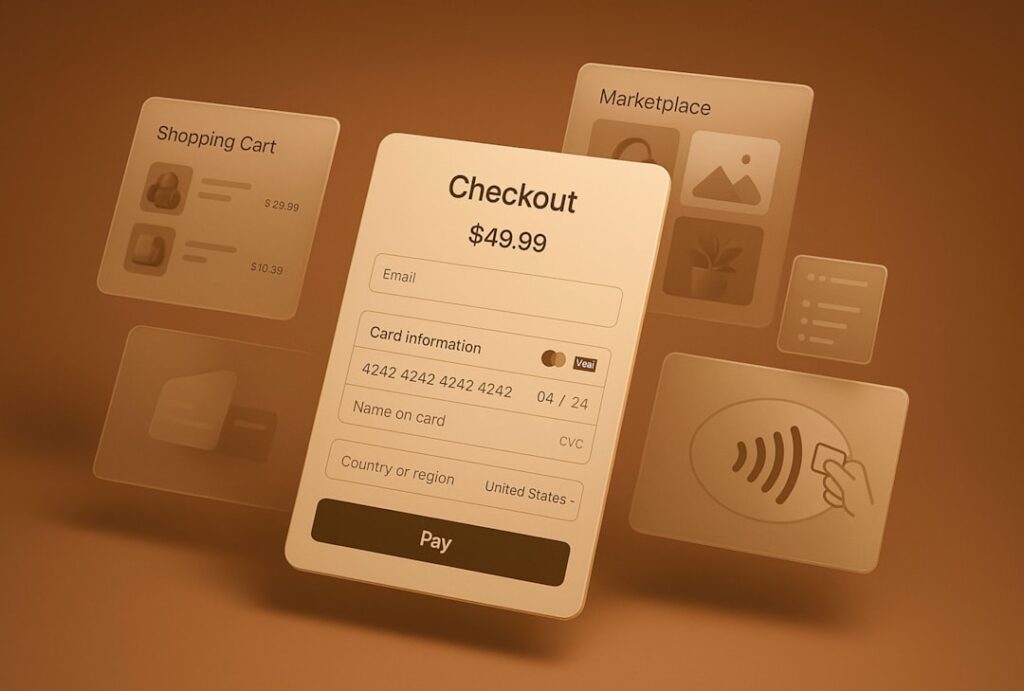
Italian e-commerce is facing a structural transformation. On January 11, 2026, Google CEO Sundar Pichai announced the Universal Commerce Protocol at the National Retail Federation conference., marking a decisive step towards a model of commerce managed by autonomous AI agents. For Italian online stores and marketplaces, this evolution represents both a strategic opportunity and an operational challenge that requires immediate technical and organizational adaptations.
In recent months, the concept of “agentic commerce” — commerce managed by artificial intelligence that makes transactions on behalf of consumers — has moved from academic theory to concrete operational infrastructure. Innovation in retail is proceeding at a rapid pace, with agent commerce (where AI completes tasks on behalf of people) evolving from concept to reality.. For Italian companies, understanding the role of the’Universal Commerce Protocol and Google's new tools are no longer optional: they are a strategic priority to remain visible in the discovery channels of 2026 and beyond.
This article analyzes in detail what UCP is, how Google's AI Agents work in a business context, what implications it has for Italian stores, and what concrete actions can be taken today to prepare the technical infrastructure and product data for this new reality.
What is the Universal Commerce Protocol (UCP)?
The Universal Commerce Protocol (UCP) is a new open standard for agent-based commerce between platforms. In technical terms, UCP establishes a common language that allows AI agents, sales platform systems, and payment providers to interact without the need for custom integrations for every combination.
UCP establishes a common language for agents and systems operating together across consumer, enterprise, and payment provider surfaces. Instead of requiring unique connections for each individual agent, UCP allows all agents to interact with ease.. This standardization eliminates the complexity of the so-called “N-to-N” problem: without UCP, each AI shopping platform would have to build custom integrations with every single retailer.
The layered architecture of UCP
UCP is not a single API, but a layered architecture with three distinct levels: a Shopping service that defines core transaction primitives, Capabilities that add major functional areas, and Extensions that augment capabilities with domain-specific schemas.. This modular design allows merchants to implement UCP incrementally.
In practice, a small online store could start by implementing only the checkout capability, while a large retailer could add functionalities for loyalty management, dynamic discounts, return tracking, and integrations with real-time inventory systems.
Partners and endorsements
UCP was co-developed with industry leaders including Shopify, Etsy, Wayfair, Target, and Walmart, and approved by more than 20 other ecosystem partners such as Adyen, American Express, Best Buy, Flipkart, Macy’s Inc., Mastercard, Stripe, The Home Depot, Visa, and Zalando.. For Italian retailers, this global endorsement signals that UCP is not a Google experiment, but rather an industry standardization that major industry players are adopting.
How Google Launches Information Agents in a Business Context
Google has introduced two main tools that make agentic commerce operational: Business Agent and direct checkout via AI Mode in Search e Gemini.
Business Agent: the virtual sales assistant
Business Agent allows customers to chat directly with brands on Search, like with a virtual sales assistant.. Unlike traditional chatbots, Business Agent is powered by Gemini and integrated directly into search results pages and the Gemini app. Consumers can ask questions about products, receive personalized recommendations, and proceed to checkout without ever leaving the Google interface.
AI Mode and Gemini: Shopping Surfaces
UCP will soon enhance a new checkout feature on eligible Google product ads in AI Mode on Search and within the Gemini app, allowing customers to check out at eligible online stores while searching on Google.. This transforms Google from a discovery channel into a direct transaction channel, completely bypassing the merchant's website at the point of purchase.
Universal Cart: The cross-platform smart shopping cart
At Google I/O 2026, the new Universal Cart was introduced, a smart shopping cart and the new hub for shopping on Google.. Universal Cart will be launched on Search and in the Gemini app in the United States over the summer, with YouTube and Gmail to follow. This means consumers can add items from multiple retailers to a single cart and then proceed to a unified checkout via Google Pay.
Strategic Implications for Italian Online Stores
The visibility challenge: from keywords to “Signal Density”
In the traditional e-commerce model, visibility is governed by SEO, page performance, and search result ranking. In the agentic model, to remain visible to shopping bots, brands need to optimize for “Signal Density” — providing high-quality structured data, such as return policies, carbon footprints, and real-time inventory, that AI agents require to verify a product's value.
In other words: if your product data isn't structured, complete, and machine-readable, AI agents won't even be able to find or evaluate you properly. The good news is that since UCP is an open-source protocol, it actually levels the playing field, allowing mid-tier brands to compete directly with the giants by providing more “Signal Density” in their data.
The impact on direct traffic and user experience
Traffic to the website may decline. A 25% decrease in search engine traffic is already projected for 2026 due to AI chatbots and agents, which means that a potential rise in agent-driven commerce could also affect web traffic. Users are likely to spend less time on brand websites if AI agents can handle the entire purchasing process on their behalf. For Italian businesses accustomed to keeping visitors on their site to build trust and upsell, this represents a paradigm shift.
The consequence? The competitive value of a well-designed and user-friendly website shifts towards the value of correct, real-time data, alongside impeccable reputation and review management.
Trust as a Differentiating Factor
While 70% of consumers use AI for search, only 41% currently allow AI to complete purchases. Brands that adopt a dual-track content strategy—balancing human-centered, emotional narratives with machine-readable metadata—will build the trust needed to succeed in the age of agents. For Italian retailers, this means continuing to invest in brand storytelling, quality imagery, and evocative descriptions — but also ensuring that all this content is accompanied by verifiable structured data.
Integrate the Payment Gateway: Technical Checklist for Italian E-commerce
The implementation of the UCP is not technically complex but requires systematic planning. Here are the concrete steps.
Step 1: Product Data Audit and Metadata Structure
- Verify that all items in your catalog are present in Google Merchant Center with fully populated feeds (title, description, image, price, availability).
- Implement the structured markup schema (Schema.org) for each product page:
Product,Offer,AggregateRating,Item Availability. - Ensure that the data is updated in real time: inventory, prices, shipping policies.
- Add the new Merchant Center data attributes designed for easy discovery in the era of conversational commerce, on surfaces like AI Mode, Gemini, and Business Agent. These new attributes complement retailers' existing data feeds and go beyond traditional keywords to include answers to common questions about products, compatible accessories, or substitutes..
Step 2: Choose the integration approach
UCP supports REST API transport and MCP binding. It allows merchants to choose the set of capabilities and extensions they wish to support, and the communication medium that best suits their development needs, such as API, MCP, or A2A. Native SDKs are available for better language bindings, enabling you to integrate UCP faster into your existing development environment..
For most Italian shops, integration will occur through:
- Google Merchant Center API Product data synchronization and agent-specific attributes for agency.
- UCP REST API (optional): For merchants who wish to implement custom checkouts or advanced business logic.
- MCP (Model Context Protocol): to connect backend inventory systems directly to Google AI agents.
Step 3: Secure Checkout Implementation
UCP supports secure payments using tokenization and allows merchants to use existing payment integrations via payment handlers.. For Italian businesses already using Stripe, PayPal, Adyen, or other gateways, the good news is that Retailers remain the registered seller, with the ability to customize the integration according to their specific needs, while capturing sales and avoiding abandoned carts.
The configuration requires:
- Connecting your payment gateway to Google's UCP system (initially available for US merchants, expanding globally).
- Verify that Google Pay is enabled for your store and that payment data is secured through tokenization.
- End-to-end checkout flow test AI Mode in Search e Gemini app.
Step 4: Configure New Merchant Center Attributes
Google is introducing dozens of new attributes for conversational commerce. The most critical for UCP adoption are:
- Frequently Asked Questions: Enhance descriptions with structured FAQs that agents can consume.
- Product Compatibility: Indicate which accessories or complementary products are available.
- Return Policy Clearly communicate terms and conditions in a structured format.
- Sustainability data: if relevant to your market, include environmental information (e.g., carbon footprint, recycled materials).
- Shipping details: Delivery speed, costs, in-store pickup options.
Step 5: Monitoring Agent Visibility
Unlike traditional SEO, where you use Google Search Console to track impressions and clicks, agent commerce requires new metrics:
- Agent discovery: How many times do your products appear in AI Mode and Gemini responses?
- Visibility in universal carts: Are your products added to smart carts?
- Agent conversion rate: What percentage of users who discover your product through AI agents complete the purchase?
- Data completeness score: How complete is your catalog data according to the new UCP standards?
Use Google Analytics 4 and Google Merchant Center to set up custom tracking for purchases made through AI Mode and Gemini.
Comparison of UCP and ACP: Which Standard to Adopt?
In the current landscape, two main protocols coexist:
- Google's Universal Commerce Protocol (UCP): adopt a surface-agnostic approach, aiming to standardize how platforms, agents, and merchants execute commerce flows across the entire ecosystem.
- OpenAI/Stripe Agentic Commerce Protocol (ACP): It is optimized for merchant integrations with ChatGPT.
For Italian shops, the recommended strategy is:
Implement CPU first, as it is backed by Google, which dominates the Italian online discovery market. ACP remains a secondary priority unless your target customer base is heavily concentrated on ChatGPT users.
Impact on Italian Marketplaces (Amazon, eBay, Shopify)
If your store operates on marketplace platforms such as Amazon, eBay, o Shopify, the good news is that Shopify and Etsy are co-developers of UCP. This means:
- Shopify merchants: Your products will automatically be compatible with UCP once Shopify implements full support. In the meantime, ensure your catalog data is complete and up-to-date.
- eBay sellers: if eBay adheres to UCP (currently unconfirmed), you will receive updates on support.
- Amazon sellers: Amazon will likely develop its own proprietary protocol, but we'll keep an eye out for any official announcements.
The tactical advice: Don't wait for your marketplace platform to implement UCP. Start improving your product data on Google Merchant Center feeds right away, as this is the foundation for visibility regardless of the platform you use.
Roadmap Futura: What to Expect in 2026 and Beyond
In the coming months, Google will work with retailers to expand globally and add more capabilities—such as discovering related products, applying loyalty rewards, and enhancing personalized shopping experiences on Google.. Specifically:
- Q2-Q3 2026 UCP checkout expansion to Canada, Australia, and the United Kingdom.
- Q3 2026 Launch of UCP on YouTube Shopping.
- Fine 2026: Support for additional verticals such as hotel booking and local food delivery.
- 2027: Possible integration of UCP with Gmail Shopping and other Google surfaces.
For Italian shops, UCP is coming to YouTube in the US and on even more verticals, starting soon with hotel bookings and local food delivery..
FAQ
If I adopt UCP, will I lose control over customer relationships?
No. Remain the Merchant of Record. Keep all your customer data and relationships.. Google remains the facilitator of the transaction, but you retain full ownership of customer relationships, data, and post-purchase experience. This means you can still send follow-up emails, manage returns, and collect feedback directly.
What is the implementation cost of UCP for a small Italian shop?
The implementation of UCP does not involve direct costs from Google. The cost is primarily operational: time spent on data auditing, metadata structuring, and Merchant Center feed configuration. For a store with < 1000 SKUs, an estimated 40-80 hours of technical work are required. If you work with an Italian digital agency, a budget of €2,000-€5,000 is reasonable.
3. Can I implement UCP without taking resources away from my main website?
Yes, with a smart approach. Layered design means merchants can adopt UCP incrementally. A small retailer might initially implement only the checkout capability.. Focus first on data auditing and Merchant Center sync, as that's a technical low-lift. UCP Checkout is a subsequent phase.
4. How do I know if my products are visible in Google's AI Modes?
Currently, Google does not provide direct visibility in Search Console for agent traffic. SEO and GEO strategies may need to change. As agentic AI takes a more prominent role in product discovery, whether a page ranks for a keyword may matter less than how well a merchant's content and product data can satisfy detailed, intent-heavy queries.. Monitor your e-commerce KPIs (number of orders, average order value) for new traffic sources in Q2-Q3 2026 when Google checkout via AI Mode becomes more widespread.
Does UCP affect my traditional SEO strategy?
No, it doesn't replace it. UCP complements SEO: continue to optimize for traditional search, but add the agentic optimization layer (comprehensive structured data, signal density). The stores that will win in 2026 will be those that excel in both SEO and agentic data readiness.
Conclusion: The 2026 Strategic Window
Google's UCP announcement is one of the clearest signs yet that agentic commerce has moved past the “what if” stage and is being taken seriously by major platforms.. For Italian online stores and marketplaces, this is not a minor technical update. It's a paradigm shift.
The concrete steps Italian retailers must take today are:
- Immediate audit of product data: Check completeness, accuracy, and real-time updates in Google Merchant Center.
- Implementation of structured schema markup: ensure each product page displays data in machine-readable format.
- Adding conversational attributes: Enhance descriptions with FAQs, compatibility, shipping details, and return policies.
- AI Mode Checkout Test: When available, test the end-to-end purchase flow to identify friction.
- Agent Visibility Monitoring: Prepare custom dashboards in GA4 and Google Ads to track conversions originating from AI surfaces.
The winning model is one where retailers and brands preserve their voice, their offers, and their relationships, but do so through standardized interfaces that agents can reliably consume.. This is your horizon in 2026.
If your team has specific questions on how to prepare the technical infrastructure for UCP, you can delve deeper by consulting the’Article on how to test your site in Google's new AI Modes using the Search Console API. Furthermore, to understand how AI agents are transforming the entire digital ecosystem, we recommend reading our in-depth analysis on Entity Authority and how to build visibility to be cited by ChatGPT, Perplexity, and Google AI.
Agentic commerce is here. The question is no longer whether to adopt UCP, but when to start. Share your strategies and challenges encountered in the comments – our team of WordPress and e-commerce experts will be happy to engage in technical discussions.