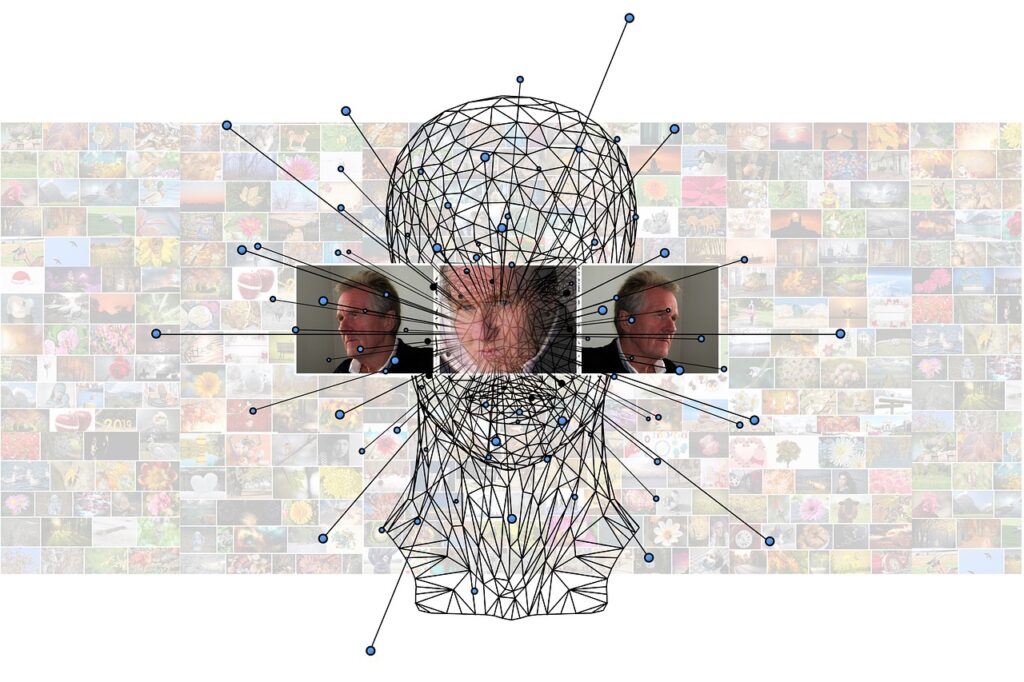
The inflation of unreviewed synthetic content presents a critical challenge for publishers, researchers, and readers in 2026. AI Slop — the term used to describe low-quality content generated by language models without significant human review — is saturating digital ecosystems from academic literature to publishing platforms. The ability to distinguish between Genuinely human content, AI-assisted content with verified expertise e raw output without editorial control It has become a fundamental technical skill.
This article analyzes the technical framework for identifying synthetic content, exploring statistical metrics, behavioral linguistic patterns, and advanced verification strategies that will work in 2026, when language models generate text distinguishable from human-written text only by indirect signals.
Why AI Slop Detection Became Complex in 2026
The challenge of contemporary detection is radical: Modern language models produce text that trained linguists, expert journalists, and specialized classifiers cannot reliably distinguish from human writing at scale.. It is no longer a matter of identifying “predictive flatness o Regular syntactic coherence — the signals present in early text generation models. Models like GPT-5, Claude, Gemini, LLaMA, and DeepSeek now generate content with substantially greater variation..
Consequently, The detection now requires behavioral signals, not just textual analysis.. Purely linguistic approaches—however sophisticated—have reached the limit of their operational effectiveness. Modern frameworks integrate statistical metrics, posting velocity analysis, authenticity signals, and authorship verification as complementary factors.
Technical Framework: Three Levels of Detection
Level 1 — Linguistic Statistical Metrics (Perplexity and Burstiness)
Detection systems use a combination of statistical modeling, stylometry, and machine learning classifiers.. The key metrics are:
- Perplexity: Metric that shows how predictable text is; AI writing tends to have lower perplexity. Language models are optimized to minimize perplexity, producing statistically “safe” text but less varied than genuine human cognition.
- Burstiness: Variation in sentence length and structure. Human writing is typically more variable. Google measures the standard deviation in sentence length in page text; a low standard deviation—every sentence between 18-24 words—is a strong signal of unedited AI output.
- Stylometric Features: Features such as word length, functional word frequency, and syntactic patterns. Tools leveraging features from corpus studies like StyloAI, which uses 31 stylometric markers.
The implementation of detection using statistical metrics follows a standardized workflow:
- Extract feature vectors that represent linguistic attributes; use classifiers such as transformer ensembles or neural networks to determine the origin; output a probability score.
- Aggregate multiple statistical signals – don't rely on a single metric – weighting them using models trained on human vs. AI text datasets.
- Obtain a final probability (e.g., “82% AI-generated probability”) accompanied by an explanatory analysis of the sentences that drive the score.
Critical limit: Accuracy remains inconsistent across tools and content types. A 2023 evaluation of 14 tools—including GPTZero and Turnitin—found that none exceeded an accuracy score of 80%; only five scored above 70%.. Tools often misclassify text produced by non-native English speakers or highly stylized formal human prose..
Level 2 - Behavioral Signals and Temporal Analysis
Where text analysis fails, behavioral signals shine. The behavioral signals prioritized by the methodology are: posting velocity and temporal clustering, network topology (dense cross-amplification within defined account clusters), account lifecycle patterns (creation clustering followed by sudden activation), and cross-platform correlation..
What changed in 2026 is the weight assigned to velocity as a primary early-warning signal.. Analyze the’Simultaneous coordinated activation of networks is more reliable than examining the features of a single content page.
For individual publishers and authorship verification, this implies:
- Monitor publication frequency and timing patterns — “slop” content is often produced in anomalously high volumes within short windows.
- Evaluate stylistic consistency between articles over time. A human writer exhibits stylistic evolution and a recognizable “voice.”.
- Look for signs of “humanness” such as autobiography, correctable errors, controversial positions, and geographical or contextual specificity.
Level 3 — Linguistic Patterns and Verbal Tics
Language models have verbal tics. Phrases like “it's important to note,” “in today's rapidly evolving landscape,” “delve into,” “at the end of the day,” “a testament to,” and “navigating the complexities” appear at dramatically higher rates in AI-generated text compared to human writing. Google maintains a considered lexicon of these phrases as part of its content quality evaluation..
Detection is not based on banning single phrases. It's statistical density that matters. An article that uses three or four of these sentences is normal. A page using twelve or fifteen flags content published without editorial review..
Basically, scan the outputs for accumulation of:
- Predictable transition words (“furthermore,” “in conclusion,” “it is important to note”)
- High-frequency empty words with no specific semantic addition
- Absence of Personal voice — first-person anecdotes, regional idiomatic expressions, strongly held opinions
Advanced Pattern Recognition: Fingerprinting and Model-Specific Detection
Beyond standard linguistic metrics, emerging techniques in 2026 include:
Watermarking and Cryptographic Provenance
Provenance tracking: blockchain-based content authenticity certificates that cryptographically prove human authorship or track AI assistance levels. OpenAI has already begun implementing watermarks (SynthID) on generated content, although these remain removable or bypassable.
Model Fingerprinting and Specific Identification
Model fingerprinting: techniques that identify not only if content is AI-generated, but also which specific model created it, allowing for targeted detection strategies.. Diverse AI architectures leave distinctive mathematical fingerprints in generated content, enabling the identification of specific models and generation techniques..
This approach is robust to new model releases because it addresses fundamental mathematical properties of generation rather than the visual output of a single model, without requiring constant retraining.
Stylometric Fingerprinting and Author Attribution
Stylometric analysis—the study of an author's unique “way of writing”—remains one of the most robust frameworks. The creation of a tool to detect an individual's unique syntactic signature—a “linguistic fingerprint” shaped by their sentence structure, word choice, and punctuation usage—to ensure students submit original work, regardless of AI-generated content or plagiarism, by tracking the evolution of writing style..
When implemented correctly, this method achieves high accuracies. The results show that authorship attribution using the stylometric method achieved an accuracy of over 90%.
Current Limitations and Robustness of Detection
No detection methodology is immune to evasion. Minor modifications, paraphrasing, or rewrites significantly reduce detection reliability.. Adversarial modifications—such as paraphrasing or mixing AI-human editing—significantly reduce detection performance..
Furthermore, Content written by humans can be mistakenly flagged as AI-generated because detection tools rely on statistical pattern recognition rather than verified authorship signals. This limitation creates false positives when human writing resembles predictable linguistic patterns..
Long, natural text improves detection success Statistical metrics require sufficient volume for discrimination.
Practical Implementation: Authorship Verification in 2026
Instead of relying on a single detector, publishers should implement a tiered framework:
Step 1 — Automated Statistical Screening
Run the content through an ensemble of detectors (e.g., multiple paid/open-source tools to compensate for individual biases). Look for consistency in the results, not single binary verdicts.
Step 2 — Behavioral Pattern Analysis
Analyze the author attribute over time:
- Consistency in stylistic voice, complexity of topics, and depth of expertise.
- Publishing patterns — human productivity versus suspicious accumulation.
- Engagement in comments and reviews — does the content generate constructive debates or resonate generically?
Step 3 — Stylometric Profiling
For regular authors, build a “linguistic fingerprint” profile based on a verified prior corpus. New articles that significantly deviate from this profile warrant additional scrutiny. This approach is particularly effective for identifying guest-written content from novices or entirely synthetic content.
Step 4 — Stratified Human Review
Ensemble approaches with human review for borderline cases offer practical solutions. The most efficient content workflow in 2026 is not “generate and publish” — it's “generate, detect, humanize, verify.” Detection first identifies which sections of a draft carry the statistical signature of AI-generated text; humanization then transforms those sections; a second detection pass confirms the result..
SEO Implications: E-E-A-T and Quality in Core Updates
AI slop detection is directly related to Google's 2026 quality signals. Anecdotes in the first person, named locations, specific dates, strongly held opinions, disagreements with popular positions, informal language, and regional idiom all register as positive quality signals within Google's E-E-A-T framework..
In other words: content that passes robust authorship verification and shows human specificity gains ranking advantages. Content that fails is penalized not because it is “AI,” but because it lacks expertise, authoritativeness, and trustworthiness.
Connected to this is the theme of AI-assisted quality content, which is permitted and positively classified if accompanied by visible editorial oversight and subject matter review. The use of AI as a tool (drafting, research, ideation) is distinct from publishing unedited raw output.
Technical Tools Available in 2026
No single tool offers 100%-level reliable detection, but these stacks are standard in publishing operations:
- Statistical ClassifiersGPTZero, Originality.ai, ZeroGPT (with documented limitations)
- Watermark DetectionOpenAI SynthID scanner, C2PA metadata validators
- Stylometric AnalysisWriteprints framework, custom ML models trained on proprietary corpus
- Behavioral MonitoringContent publishing velocity tracking, engagement signal analysis via GA4/Segment
- Hybrid Human-AI PlatformsTools that allow human reviewers to annotate AI output, creating datasets for fine-tuning custom detectors
Publishers of mid- and large-tier scale are investing in proprietary detection models trained on domain-specific corpora and a library of verified authors—an approach that maximizes accuracy in the specific operational context.
Link to Broader Editorial Strategies
AI Slop Detection should be integrated into a more comprehensive editorial strategy, discussed in the related articles on this blog:
- To understand how human authenticity impacts discovery and monetization, consult Human-First Content vs. AI Slop 2026: Community-Led Marketing Strategy.
- For authorship verification strategies in Knowledge Graphs and Brand Entities, read Authorship Verification and Brand Entity Authority.
- To understand how AI-assisted quality content differs from slop in the context of SEO 2026, consult Small Language Models vs. Large Language Models in 2026 e AI Slop Detection Framework.
- For E-E-A-T strategies in 2026, read E-E-A-T 2026: Experience Over Credentials.
- For editorial-scale AI compliance and disclosure governance, consult AI Act Compliance for Italian Publishers.
FAQ
Which single tool offers the most accurate detection in 2026?
No single tool offers reliable accuracy above 70–80%, and this depends on the content domain and the editorial rewriting applied. The best approach is to use an ensemble of 2–3 detectors combined with behavioral and stylometric analysis. Commercial detectors (Originality.ai, GPTZero) remain useful as a “first step,” but should always be accompanied by human review for high-stakes verification.
Can AI detection be bypassed?
Yes. Paraphrasing, partial human rewriting, and mixing human sections with AI output significantly reduce detection. This is why professional editors focus on authorship verification (author's stylistic profile, consistency over time) rather than just single-text detection. Circumvention is operationally costly and often leads to lower-quality output—which still triggers Google's quality penalties.
Does Google penalize AI-generated content?
No, not directly. Google doesn't penalize content simply because it was generated by AI, if it's accompanied by verified expertise and editorial review. What Google penalizes is the’lack of qualityRaw output without revision, lack of personal voice, absence of empirical specificity. High-quality AI-assisted content (AI for drafting, humans for curation and expertise) competes favorably.
Which metric is more reliable for identifying AI slop: perplexity or burstiness?
No single metric is definitive. Burstiness (variation in sentence length) is often more reliable than perplexity because it is less circumvented by rewriting. However, the best approach is to aggregate both statistical metrics and behavioral signals—the combination is more robust than any single indicator.
How do I build a proprietary detection model for my editorial website?
Collect a corpus of 500+ articles previously verified as “human-written” and 500+ examples publicly known to be AI-generated (or a compilation of third-party findings). Extract stylometric features (word length, word frequency, POS tags, readability scores). Train an ensemble classifier (Random Forest, Gradient Boosting, or a fine-tuned Transformer) on this dataset. Validate on a hold-out set and retrain monthly as new models are released. This approach achieves 85–92% accuracy on domain-specific content.
Conclusion
AI Slop Detection in 2026 is a multi-layered technical capability that combines statistical metrics, behavioral analysis, and stylometric authorship verification. No single signal is definitive, but tactical detection ensembles — combining automated detectors, temporal pattern analysis, and stratified human review — allow publishers to maintain content integrity in an era of scaled synthetic generation.
The central lesson is that Content quality is not identified by its means of generation, but from the presence of verified expertise, human specificity, and editorial oversight. Publishers who implement robust authorship verification frameworks—not limited to single textual detection—are positioned to dominate in Google's quality updates and earn reader loyalty in an AI-slop-saturated infoshere.
How are you approaching AI-generated content detection and authorship verification in 2026? Share specific strategies and empirical results in the comments.