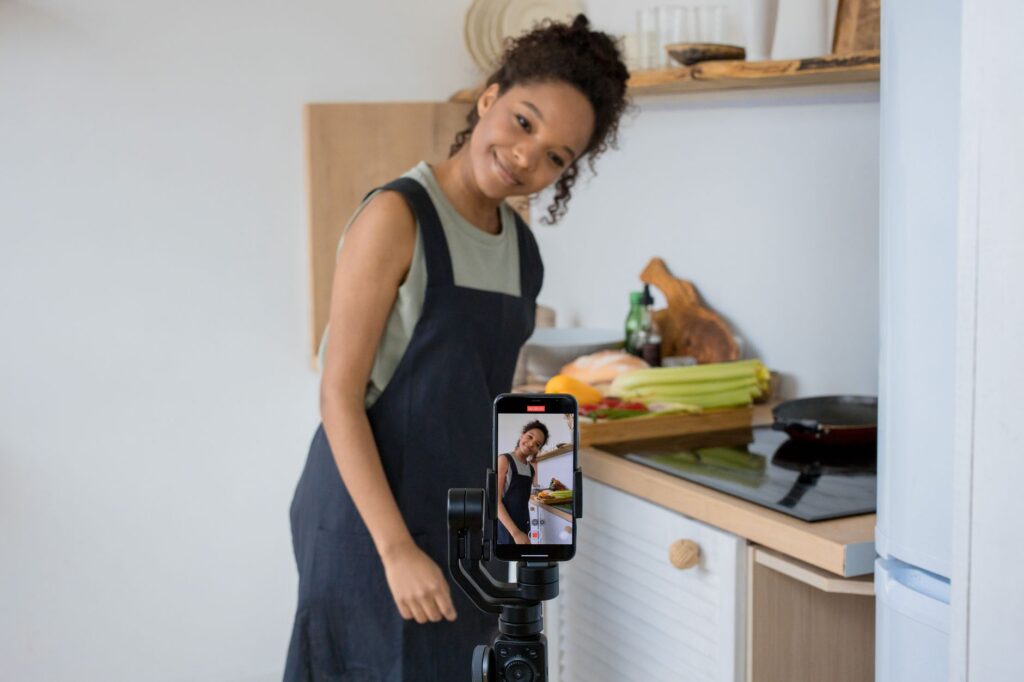
In 2026, the social media algorithm underwent a radical transformation: authenticity is no longer an added value, but a Direct technical signal that powers content ranking and distribution. Lo-fi content systematically outperforms polished brand creatives, and empirical data show that this is not a marginal phenomenon: UGC videos on TikTok and Instagram Reels generate a 71% increase in engagement across 1,200 brands analyzed in North America, Europe, and Southeast Asia.
The analysis of this megatrend reveals a paradigm shift in content marketing strategy: companies are moving away from hundred-thousand euro production teams in favor of creator-led strategies that generate 8.7x higher engagement compared to traditional branded content.
Why Authenticity Has Become a Measurable Performance Indicator
79% of people say that UGC significantly influences their purchasing decisions, far more so than branded content. This data is not just a consumer preference: it's a signal that algorithms have recognized and encoded into their ranking systems.
The mechanism is simple: when lo-fi content generates higher watch-through rates and completion rates, TikTok, Instagram, and LinkedIn amplify it. Lo-fi ads on TikTok achieve watch-through rates 321% higher than their polished counterparts, while raw Reels outperform studio-quality content by 201% on average.
This shift is radical. Historically, the production budget was directly linked to the perception of quality. In 2026, an iPhone video with poor lighting and ambient sound can generate 8.7 times more engagement than a corporate production costing 1.45 million.
Numbers: UGC vs. Brand Polished Content in 2026
The performance metrics are unequivocal:
- Engagement rates Campaigns that incorporate user-generated content (UGC) generate engagement rates 63% higher than those of brand-only content, up from 50% the previous year.
- Conversions UGC generates 291% more conversions than non-UGC formats, while Product pages featuring customer-generated content see higher conversion rates.
- Cost per acquisition: Brands save 40–60% on production costs when they replace studio shoots with UGC creators, and many brands are now testing dozens of UGC concepts for the price of a single TV commercial.
- Click-through rate on TikTok: Ads based on UGC get 4x higher CTR compared to traditional branded content.
Case Study: Creator-Led Strategy on TikTok, Instagram, and LinkedIn
TikTok: The Reign of Nano and Micro Creators
TikTok leads with an average organic engagement rate of 2,631 per post, but this figure masks an interesting breakdown by creator tier. Nano-creators (1K–10K followers) dominate performance campaigns because their engagement is authentic and their cost per video ranges from 1.45 to 2.00.
The optimal strategy on TikTok in 2026 involves:
- Sourcing from multiple creators Instead of relying on a single influencer, brands commission 20-50 variations of UGC content from different creators, selected through niche hashtag communities such as #BookTok, #FitnessTok, #CleanTok.
- Rapid-fire testing: The secret to smart scaling is to test, tweak, and only scale what converts.. Each video is launched as a Spark Ad with a minimum initial budget ($5–$15), and only the top-performing ads receive scaling budgets.
- Hook: Are you tired of [pain point]? Benefit: You can now [desired outcome] by [solution]. Ideal lo-fi pillars include formats (testimonials, how-tos, reactions), specific hooks (“Show me how...”, “3 things to know before...”), and success KPIs (watch-through rate, saves, comment rate)..
Instagram: Raw Reels and DM Sharing Signals
Instagram posts featuring user-generated content (UGC) generate 70% more engagement than brand-only content. Crucially, On LinkedIn, videos made by employees consistently outperform corporate explainer videos., a pattern that is also replicated on Instagram in B2B-adjacent content.
Instagram strategy in 2026 emphasizes DM-share signals and carousel dwell time., both elements that benefit most from authentic content:
- A carousel with non-corporate testimonials (DM screenshots, intentionally poorly written text, unfiltered photos) generates 2-3x more shares than a perfect corporate gallery.
- Raw Reels with ambient audio and psychological micro-stumbles read as “real,” triggering a higher propensity to share.
- Emails that include customer photo reviews, star ratings, or embedded UGC video thumbnails achieve a click-through rate that is 89% higher than non-UGC emails, creating a flywheel between Instagram content and re-engagement via email.
LinkedIn: Employee-Led Content and B2B Creator Authority
On LinkedIn, videos made by employees consistently outperform corporate explainer videos.. This phenomenon is particularly powerful for Italian B2B brands, where employee advocacy is still underutilized.
The LinkedIn video strategy 2026 rewards video and carousel formats, and the trend towards authenticity is even more pronounced in the professional context:
- Founder/CEO talking head A CEO speaking casually in front of a webcam (unscripted, with natural microexpressions) will generate 3-5x more engagement than a branded explainer video about a study.
- Employee testimonial: An unedited screenshot of Slack where a team member explains how they use an internal or external product is more credible than a written case study.
- “Unscripted ”behind the scenes" Videos of the team gathered, photos from the office with natural light, and snippets of internal discussions (protected by privacy) generate trust immediately.
The Technical Framework: How to Implement a Creator-Led Strategy
Phase 1: Creator Sourcing and Community Hashtag
Nano-influencers (1K-10K followers) provide the highest engagement rates at the lowest cost per video.. Sourcing is done through:
- Niche hashtag searches (#UGCcreator, #TikTokPartner, #BookTok for book brands, #CleanTok for home and beauty).
- Dedicated platforms like TikTok Creator Marketplace, Incense, Billo, JoinBrands.
- Competitor analysis: identify which creators are already working with your competitors and approach them directly.
- Base customers existing: satisfied customers are often the most authentic creators.
Phase 2: Minimalist Brief and Creative Freedom
Performance drops when people play “coached.” Provide sharp prompts instead of scripts: “Tell me your problem in one sentence. Show the product solving the problem in two shots.”.
The common mistake is over-directing. The ideal brief for UGC contains:
- I am having trouble communicating.
- Format type (testimonial, problem-solution, lifestyle integration, unboxing).
- 1-2 explicit key messages.
- Platform + duration (15-30 seconds per TikTok/Reels, 20-40 seconds per LinkedIn).
- Zero script. Creative freedom is the secret.
Phase 3: Batch Testing and Rapid Iteration
The best-performing marketing teams adopt a “UGC-first” model with three pillars: sourcing dozens of UGC videos from influencers or customers, launching rapid-fire testing across TikTok, Instagram, and YouTube, and scaling the winners..
Practical implementation:
- Commission 15–25 videos from different creators (1,400–5,000 each, for a total of 15,000–50,000 per round).
- Launch each video as a separate ad with a minimum budget (CPM: $5–$15; total budget per ad: $50–$100).
- Tracking for 48-72 hours: watch-through rate, completion rate, CPC, CTR.
- Identify the top 3–5 performers (those with a completion rate >50% and a CPC <$0.50).
- Scale the winners to $500–$2,000 budget each.
- Repeat the cycle every 2-4 weeks.
Phase 4: Cross-Platform Repurposing
A single lo-fi video can be broken down into TikToks, embedded on landing pages, featured in email campaigns, or turned into Instagram Stories, providing a complete multi-channel strategy from a single authentic moment..
Ideal Repurposing Strategy:
- TikTok/Reels: Full video, 15-30 sec.
- LinkedIn Version 20-40 sec with professional captions.
- YouTube Shorts: Full version.
- Email: Video thumbnail + link to the video.
- Landing page Carousel of customer testimonial videos.
- Instagram Story 7-10 sec snippet + link.
Psychological Factors: Why Lo-Fi Wins
Consumers consistently rate UGC as more authentic than brand content. Small imperfections—uneven lighting, handheld camera, casual delivery—read as “real,” not scripted..
Furthermore, A significant portion of consumers believe that brands are too self-promotional on social media. UGC bypasses this defense mechanism because it doesn't seem like advertising..
The most surprising fact: 49% of Gen Z now believes that UGC is the most credible source of brand information available—up from 35% a year ago—and 62% have made a purchase directly triggered by a peer-created TikTok or Instagram Reel in the past 30 days.
Key Metrics to Track
Not all numbers will carry the same weight in 2026. Brand authority built through podcasts, videocasts, and UGC platforms requires specific KPIs:
- Watch-through rate (WTR): Minimum target: 45% for TikTok, 50% for Instagram Reels.
- Completion rate: The completion rate is the single most important metric in 2026. TikTok’s algorithm prioritizes the number of viewers who watch the entire video. A video with 50,000 views and a 70.1% completion rate outperforms a video with 500,000 views and a 30.1% completion rate..
- Shares vs. Likes: High-quality engagement (comments, shares, saves) matters more than vanity metrics (likes). Videos generate a 40–60% higher engagement rate than static posts..
- Cost per Acquisition (CPA): The true measure of profitability. If a UGC ad generates a lower CPA than polished brand creatives, that’s the metric that really matters.
- Email CTR after video: Emails with embedded UGC video thumbnails achieve a higher CTR of 89%—this creates a multi-channel engagement flywheel.
Common Implementation Mistakes
Organizations that adopt a creator-led strategy often encounter recurring pitfalls:
- Over-branding of the brief When a brand provides a rigid script, the creator comes across as “coached,” and the authenticity is lost. The trend is to write 5-page briefs; the best practice is a 5-point brief.
- Incorrect selection of creators: Choosing creators with a high number of followers but low engagement is a classic mistake. A creator with 5,000 followers and a high engagement rate can outperform a creator with 500,000 followers and low engagement.
- Expectations regarding virality: UGC isn’t “viral by design.” It’s effective because it consistently generates high engagement and higher conversion rates, not because every video reaches 1 million views.
- AI replication without authenticity: AI-generated UGC is emerging as a fast and cost-effective alternative to traditional creator-generated content. AI tools can produce UGC-style videos featuring realistic AI avatars that deliver scripts with natural expressions and gestures, making them nearly indistinguishable from human-created content in many cases. However, AI-UGC only works when the result remains visibly imperfect and random. If it seems “too perfect,” it fails the authenticity test.
Integration with the Content Moat Strategy
The Creator Economy and the Hybrid Media Model for Retaining Top Talent Through In-House Creator Studios represent a natural evolution of the creator-led strategy. Companies that win in 2026 don't commission UGC episodically; they build lasting relationships with creator communities and support them with resources, mentorship, and equity (often in the form of revenue share).
The ideal flywheel:
- Identify 10–15 creators who consistently perform well (top 20% engagement rate).
- Offer them a monthly retainer (1,450–2,000) or a revenue share on direct conversions.
- Give them exclusive access to new products, behind-the-scenes stories, and a direct feedback loop.
- Ask them to create 2–4 pieces of content per month (on their own schedule, using their preferred platform).
- Use this content as a template for broader batch testing.
- Collaborate with other creators on winning formats.
The Role of AI in UGC Curation
AI Content Moderation in WordPress 7.0 for Spam Detection and Role-Based Access Control is also applicable to managing UGC campaigns. When curating dozens of videos from different creators, you need:
- AI quality assessment Scripts that evaluate thumbnail quality, audio clarity, text readability, brand safety.
- Automatic metadata tagging Tagging by format (testimonial, product demo, lifestyle), tone (casual, professional, humorous), platform fit.
- Compliance check: Automatic verification of FTC disclosure, watermark presence, copyright clearance.
- Engagement prediction Models that estimate performance before launching the ad (based on creator history, content type, hook quality).
FAQ
How much does it cost to commission UGC content from creators in 2026?
Prices vary by creator tier: nano-creators (1K–10K followers) charge $50–$200 per video, micro-creators (10K–100K) charge $200–$1,000, mid-tier creators (100K–500K) charge 1,000–5,000, and macro/mega creators (500K+) charge 5,000–50,000+. Many brands start with nano and micro-creators for authentic and cost-effective content.
2. How does lo-fi content differ from low-quality or unprofessional content?
The distinction is intentionality: Lo-fi is content that intentionally minimizes production polish to maximize authenticity. Think: natural lighting, handheld framing, ambient sound, real environments. It's authentic video storytelling by design, not accident. It's shot on phones or compact cameras, quickly, where the story actually happens.. The basic technical quality (audible audio, in-focus image, stable shot) remains non-negotiable; it is the Look (not the quality) that remains intentionally imperfect.
What is the expected ROI from a creator-led campaign?
UGC generates 291% more conversions than non-UGC formats, E Implementations of leading UGC platforms deliver a 400% ROI (a 400% return on every 100% invested), with brands seeing 291% higher web conversions, 74% better product page performance, and up to 70% in content cost savings. However, these are aggregate figures; your specific ROI will depend on your creator tier, niche, and product-fit. Start with batch tests ranging from 1,400 to 1,500 to 3,000 impressions, and scale only the formats that hit your target CPA.
4. How to track UGC performance when the creator uses their own platform (not a branded platform)?
Use custom UTM parameters for each creator and each video, and track through Google Analytics 4 and your e-commerce platform. If the creator posts on their own platform (personal TikTok, Instagram account), ask them to include a trackable link in their bio or video description. For awareness campaigns, rely on engagement metrics (completion rate, comment quality, share count) rather than direct conversions.
5. What FTC/GDPR regulations do I cover when commissioning UGC content?
The FTC requires clear and conspicuous disclosure when there is a material connection between a brand and the content creator. If the creator has received free products, payment, or any form of compensation, the content must include a disclosure such as “#ad” or “#sponsored.”. In the context of Italian GDPR, ensure you have explicit usage rights and consent from any identifiable person in the video.
Conclusion: Authenticity is the Ultimate Metric
In 2026, the algorithm doesn't separate “good content” from “bad content.” It separates Authentic content From what looks like an ad. This is what drives an 8.7x higher engagement rate in creator-led campaigns based on UGC.
The brands that will thrive won't be the ones with the biggest production budgets. They will be the ones that:
- They hire dozens of micro-influencers instead of one mega-influencer.
- Launch content in 48 hours, not 6 weeks.
- They measure completion rate and CPA, not follower count and vanity metrics.
- They build lasting relationships with creators, rather than one-off campaigns.
- They accept imperfection as a signal of credibility, not poor quality.
In an era of AI-generated slop vs. editorial excellence in 2026, authentic UGC has become the most valuable marketing asset available. It's no accident: it's psychology, algorithms, and data science converging at the same point.
I'm starting a creator-led campaign today. Commission 10-15 UGC videos from nano-creators in your niche. Test performance. Scale the winners. Measure the actual ROI. The numbers will tell the story.