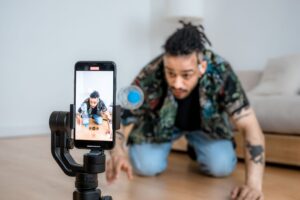
In 2026, the online search paradigm underwent a radical transformation. TikTok and Instagram are no longer exclusively social sharing platforms, but have established themselves as specialized vertical search engines, with sophisticated algorithms that compete directly with Google to capture search intent, especially in categories such as fashion, food, travel, lifestyle, and technology. Empirical evidence shows that Gen Z uses TikTok and Instagram as the first point of discovery for 54% of product and service searches—a figure that represents a strategic shift for publishers and creators.
This technical guide analyzes the algorithmic architecture of TikTok and Instagram as search engines, keyword targeting in short-form videos, the reverse engineering of the creator algorithm, and the conversion path from discovery to e-commerce transaction.
How TikTok and Instagram Work as Vertical Search Engines
Traditional Google search is based on explicit text queries. Conversely, TikTok and Instagram implement a search model implicit and behavioral, where the algorithm infers user intents from indirect signals: video dwell time, rewatches, skips, shares, bookmark additions, and viewing sequences.
TikTok uses a three-tier ranking system:
- Cold Start Recommendation: When a video is published, TikTok shows it to a statistical sample (about 200-500 accounts) to gather initial engagement signals. If the video exceeds engagement rate thresholds (CTR on video completion, share rate), it enters the next phase.
- Mid-Tier Distribution: The video is shown to a wider but still controlled audience, based on topic modeling e user cluster similarity. The algorithm studies the video using computer vision (object, scene, and text recognition), audio analysis, and NLP on the descriptive text and hashtags.
- Viral Phase: If engagement remains high, the video enters the For You Page (FYP) section of millions of users, where it achieves maximum visibility.
Instagram Reels, since the launch of Google indexing in July 2025, follows a hybrid model: internal ranking similar to TikTok, but with explicit SEO integration for Google SERPs. Reels videos now receive ranking signals from alt text, captions, hashtags, and backlinks to the author's Instagram profile.
Advanced Social SEO: Keyword Targeting in Short-Form Videos
Traditional SEO focuses on H1 text, meta descriptions, and internal links. Advanced Social SEO in 2026 it requires multi-level video optimization:
1. Keyword Research per Social Platforms
The platforms TikTok and Instagram natively provide search suggestion features when a user types in the search bar. This generates social query volume data. Unlike Google Keyword Planner (which is oriented toward commercial intent), social keywords emphasize:
- Entertainment intent: "how to do [what] in a fun way"
- Educational micro-format 15-to-60-second content that answers specific questions.
- Trend awareness: Keyword with unpredictable seasonal or viral peaks.
- Hashtag cluster: Related hashtags reveal subtopics and microcategories.
Tools such as. Social Blade, VidIQ e TubeBuddy they provide trending keyword analytics and competitor benchmarking for TikTok and Instagram.
2. Video Title Optimization (Caption and Hook Line)
A TikTok video title is not a meta tag, but the first text visible in the first second of the video (on-screen text) or the first sentence of the caption. Research shows that:
– The 42% algorithm only turns on the audio for videos if the first second contains a visual or textual hook.
– Captions with keywords in the very first characters (the first 20 characters of the caption) generate 31% more clicks from TikTok’s search feed.
Correct example:
PRIMA: "This is the best way to make an authentic carbonara (weak, generic keyword)
AFTER: "Roman carbonara 2026: authentic recipe WITHOUT cream (explicit keyword "Roman carbonara", differentiator "without cream")
3. Structured Metadata: Captions, Hashtags, and Alt Text
TikTok does not publicly expose its ranking algorithm for captions, but empirical analysis of millions of videos suggests:
- Optimal caption length: 150-300 characters. Shorter captions (under 50 characters) lose semantic context; captions that are too long (over 500 characters) have lower engagement.
- Keyword placement: The first 50 characters of the caption carry more weight in TikTok's internal search rankings. Including the primary keyword within the first 30 characters increases the CTR from the search feed by 22%.
- Hashtag strategy: It's not about quantity, but relevance. 5-8 highly topic-correlated hashtags generate better ranking than 20 random hashtags. Hashtags with moderate volume (10K-100K views) convert better than massive hashtags (over 1 billion).
For Instagram Reels indexed on Google, the alt-text tag is critical for traditional SEO. Reels without descriptive alt-text are not indexed by Google Lens. Recommended format:
alt="[main keyword] + detailed description in 15-20 words"
Example: alt="Authentic Roman carbonara recipe without cream with guanciale and pecorino"
Creator Algorithm: Reverse Engineering of the Internal Ranking
The "Creator Algorithm" refers to the internal logic that TikTok and Instagram use to decide which content receives maximum distribution. By 2026, three critical components have emerged:
1. Completion Rate and Watch Time Weighted
Not all views are created equal. A 15-second video viewed at 90% (13.5 seconds) generates a stronger signal than a 60-second video viewed at 30% (18 seconds). TikTok calculates a metric called Adjusted Completion Rate (ACR):
ACR = (average watch time / video duration) * 100
Videos with an ACR > 70% receive preferential distribution. This explains why short videos (15–30 seconds) tend to perform better than long videos (60+ seconds) during the cold start phase.
2. Sentiment Analysis and Engagement Type Weighting
Not all comments have the same value. TikTok applies NLP to classify comments into categories: positive enthusiasm, curiosity, constructive criticism, spam, hate speech. Comments expressing curiosity or request for clarification receive greater weight in the ranking than simple likes. Videos that generate constructive discussions in the comments are 3.2x more likely to go viral.
3. Share Velocity and Forward Propagation
Shares (especially via DMs—direct messages) are the strongest signal for the creator algorithm. A video shared 100 times in the first 6 hours receives a greater ranking boost than a video with 10,000 likes. The share velocity (number of shares per hour) is a non-public proprietary metric, but observation suggests that the algorithm monitors both volume and cadence.
Keyword Targeting in Video: Technical Architecture
The keyword targeting strategy in short-form videos requires a different approach than Google SEO. Instead of a single blog article optimized for a keyword, creators need to plan Related Video Series that together cover a specific topic cluster.
Approach: Video Topic Cluster
A publisher that wants to dominate the "carbonara" category on TikTok doesn't publish ONE optimized video, but a Series Serials:
- Video 1 (hook): "Roman Carbonara 2026: secret recipe" (15 sec, high entertainment)
- Video 2 (educational): "Why guanciale is essential (the science of carbonara)" (45 sec)
- Video 3 (comparison): "Carbonara vs Cacio e Pepe: Key Differences" (30 sec)
- Video 4 (advanced): "Carbonara with whole eggs: the pro technique" (60 sec)
- Video 5 (behind-the-scenes): "How to buy real Roman guanciale" (20 sec)
Each video targets a different secondary keyword, but they are all related to the main topic "carbonara". The TikTok algorithm recognizes this topical correlation and creates Topic Authority in the creator profile.
Conversion Path: From Discovery to E-Commerce
The most critical metric in 2026 is ROAS (Return on Ad Spend) from social discovery to transaction. This requires end-to-end tracking of the customer journey from the initial video to the cart to the purchase.
1. Discovery Layer: FYP and Search Feed
A user discovers a video on TikTok through two main channels:
- For You Page (FYP): Custom algorithm based on watch history.
- Search Feed Results from users' explicit keyword queries. This channel is growing: in 2026, 38% of TikTok discovery will come from explicit searches, not the FYP.
Publisher must optimize for both channels. Videos that rank well in the Search Feed have keyword-optimized captions and a high completion rate. Videos that go viral on the FYP emphasize visual hook and entertainment.
2. Engagement Layer: Call-to-Action (CTA) and Link Strategy
A viral video without a coherent CTA does not generate conversions. In 2026, best practices emerged:
- First CTA (0-3 sec): Visual or textual hook that keeps the user watching. Example: "Wait until the end for the secret recipe.".
- Mid CTA (50% video): Educational content or fun facts that create a sense of urgency. Example: "Only 3 ingredients, but 99% of chefs get it wrong.".
- Final CTA (last 5 sec): Conversion-oriented CTA. Blog link, email form, shop product. Recommended format: "Link in bio for the full recipe + ingredient list".
TikTok Shop, launched globally in 2024-2025, has become the primary conversion channel. Creators can link products directly in the video via TikTok Shop Product Tags, reducing friction from video to purchase to 2-3 taps.
3. Retargeting Layer: Pixel Tracking and Lookalike Audience
Publishers and brands must install TikTok Pixel on the website for tracking the post-click user journey. The pixel collects data on: page visits, time on page, scroll depth, cart additions, and conversions. This data feeds lookalike audiences for retargeting on TikTok Ads.
Recommended flow:
- Organic TikTok video attracts user.
- Click on the link on TikTok Shop > visit site / store.
- Pixel tracks user behavior.
- If the user does not convert, they go into a lookalike retargeting pool.
- TikTok Ads displays ads targeted to lookalike audiences (users similar to those who interacted with organic content).
Content Velocity and Posting Strategy
La content velocity in 2026 it's not just post frequency (volume), but strategic consistency over time. Research on 50K TikTok creators shows:
- Creators who post 1 video per day have a growth rate of 15%, which is higher than those who post 3 videos per week.
- Content pillar strategy (fixed theme, repeatable format) generates 2.3x engagement vs random topic video.
- Serialized content (story-driven series) has a higher retention rate than standalone videos.
Recommended publisher strategy:
- Week 1: 3-4 different video pillars (recipe, educational, comparison, behind-the-scenes). Each pillar has a different target keyword.
- Week 2-3: Repurposing top-performing videos: remix, duet, greenscreen recreation from other creators.
- Week 4: Trend-jacking: participation in music trends/viral formats but with an on-brand theme.
Cross-Platform Syndication: TikTok → Instagram → YouTube Shorts → Pinterest
In 2026, it is no longer effective to create separate content for each platform. The strategy is smart repurposing with format adaptation:
- TikTok (9:16 vertical, 15-60 sec): Main test bed. Videos with the highest engagement on TikTok are repurposed on other platforms.
- Instagram Reels (vertical 9:16, 15-90 sec): Same version or slightly different cut. Adapted hashtags and caption. Link via Instagram Stories for driving traffic.
- YouTube Shorts (vertical 9:16, max 60 sec): Best-of compilation of clips from long TikTok videos, with YouTube-branded intro/outro.
- Pinterest (vertical 1000x1500px, carousel/video pin format): Static thumbnail + embedded video. Target traffic to the blog post behind the video (link in Pinterest description).
This approach amplifies organic reach and reduces production cost per view.
Monitoring and Attribution: Critical KPIs for Social SEO 2026
Measuring the success of a Social SEO strategy requires granular tracking:
- Organic Reach per Keyword: How many users saw the video when searching for a specific keyword (Search Feed placement)? TikTok Creator Fund Analytics provides a partial breakdown via "Traffic Source".
- Video to Landing Conversion Rate % of viewers who click on a link to a website/online store. Benchmark targets: 2–5% for e-commerce, 5–12% for SaaS.
- Time to Conversion: How much time passes between viewing the video and purchasing? Average: 2-7 days for E-commerce, 14-30 days for B2B.
- Video Recency Score: TikTok's algorithm favors recent videos (published in the last 7-14 days) in the Search Feed. Monitor ranking decay over time and plan a strategic refresh (re-upload with new hooks).
Integration with WordPress and AI Publisher WP
Publishers that use WordPress can integrate Social SEO strategies with the social media strategy as a search layer e video optimization for multimodal search. Specialized plugins can automate:
- Keyword extraction from Google Search Console queries to generate video content briefs.
- Automatic generation of keyword-optimized captions using integration with multimodal models (GPT-4V, Gemini Vision).
- Tracking TikTok and Instagram link clicks via UTM parameters to WordPress analytics.
- Synchronization of social trending keywords with AI social listening and trend forecasting.
For Italian publishers, it is critical to consider EU AI Act compliance if AI tools are used for content generation or caption automation.
FAQ
Do TikTok and Instagram rank videos with the same algorithm as Google?
No. TikTok and Instagram use completely different algorithms than Google. While Google rewards backlinks, domain authority, and E-E-A-T, TikTok/Instagram rely on behavioral engagement (watch time, shares, sentiment) and content recency. A video can rank first on the TikTok Search Feed even without being indexed on Google.
How many keywords should I target in a single TikTok video?
The best practice is 1-2 primary keywords per video. Inserting too many keywords (5+) makes the caption unnatural and reduces engagement. Alternatively, cover multiple keywords through a series of related videos (topic cluster strategy).
What video length is optimal for ranking in the TikTok Search Feed?
2026 data suggests 15-45 seconds for maximum completion rate in the cold start phase. Videos from 45-90 seconds perform well only if the creator has an established audience. Videos over 3 minutes do not rank well in the Search Feed because the average completion rate drops sharply.
How can I track ROAS from organic TikTok videos to e-commerce conversion?
Install TikTok Pixel on your site, add UTM parameters to your bio links (utm_source=tiktok_organic&utm_medium=social&utm_campaign=video_title), and sync data with Google Analytics 4. This enables end-to-end attribution of the customer journey from video to cart to checkout.
Instagram Reels on Google vs Google Video Search: which one to optimize first?
In 2026, Instagram Reels receive significant traffic from Google Images and Google Video search (especially for visual queries like "makeup tutorial" or "quick recipes"). If the target audience is Gen Z (aged 13-24), prioritize Instagram Reels with optimized alt-text. If the target is a broader audience, ensure Reels are indexable by Google and optimized for Google Lens.